How Jamaicans’ Perceptions of Sustainable Development Influence Behaviours and Support Progress Toward the SDGs
05 March 2026
February 2026 – KINGSTON, Today, the Jamaica Economy Panel (JEP) publishes its latest discussion: “How Jamaicans’ Perceptions of Sustainable Development Influence Behaviours and Support Progress Toward the SDGs.”
Sustainable development remains essential to Jamaica’s long-term resilience as a Small Island Developing State, especially in light of recent climate shocks such as Hurricane Melissa (2025), which underscored the island’s environmental, economic, and social vulnerabilities. While Jamaica has embraced the Sustainable Development Goals (SDGs) through Vision 2030, progress relies heavily on how citizens understand sustainability and the extent to which perceptions translate into meaningful behavioural change.
This JEP Discussion highlights that while Jamaicans are generally aware of environmental issues, understanding of sustainable development remains uneven. Many citizens equate sustainability solely with environmental protection, with limited recognition of its economic and social dimensions. The National Environment and Planning Agency’s (NEPA) Knowledge, Attitudes, Practices, and Behaviour (KAPB) survey shows that although Jamaicans identify challenges like improper waste disposal, fewer connect these issues to public health, tourism, climate resilience, or long-term economic well-being.
The report reveals that local culture and community identity provide powerful entry points for strengthening public engagement. From yam festivals in Trelawny to Maroon traditions of land stewardship, cultural practices continue to reinforce public awareness of environmental and community-based values. Grassroots initiatives, including school gardening programmes and community clean-ups, have also been effective in building sustainable habits among youth and families.
Despite positive shifts, barriers persist. High costs limit access to renewable technologies; weak enforcement undermines environmental protection; and externally designed programmes often fail to reflect community realities. Small eco-tourism operators, particularly along the North Coast, demonstrate strong environmental commitment but face high upfront costs, limited domestic demand, and inadequate incentives.
JEP Panellists provided key insights for strengthening Jamaica’s sustainable development efforts.
Dr. Nadine McCloud underscored that perceptions strongly influence national progress: when sustainable development is presented in familiar, locally relevant terms, acceptance and behavioural change increase. She emphasised the importance of education, local leadership, and early visible wins that build public trust and momentum.
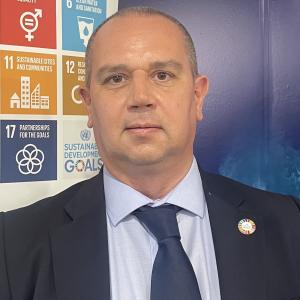
UN Senior Economist Dr. Stuart Davies noted that a whole-of-society approach, integrating behavioural strategies, cultural identity, and coordinated government action, is essential to achieving the SDGs. Aligning sustainability messaging with values of fairness, justice, and cultural pride can help transform awareness into long-term action.
Overall, the JEP Panellists concluded that Jamaica has made progress in improving awareness and certain sustainable behaviours. However, deeper advancement requires bridging the gap between perception and practice through stronger education, community participation, institutional support, and policy coherence.
Responding to the discussion, Mr. Dennis Zulu, United Nations Resident Coordinator, stressed that strengthening public understanding of sustainable development is essential to achieving the SDGs. “When sustainability is communicated in ways that reflect people’s daily realities, cultural identity, and community priorities, behaviour change follows. Jamaicans are already showing leadership through local initiatives, but accelerating progress requires stronger education, inclusive partnerships, and consistent institutional support to ensure that sustainability becomes a lived reality for all,” Zulu said.
The Jamaican Economy Panel is part of a partnership between the United Nations Resident Coordinator’s Office (UNRCO) and the Department of Economics at the University of the West Indies (UWI) Mona. The JEP brings together economic, public-sector experts and development practitioners to address monthly socio-economic questions. These questions help to highlight relevant economic issues and the collective expertise of the panellists.
For more information on the Jamaican Economy Panel and for the results of this JEP discussion, visit the UN Jamaica website at www.jamaica.un.org.
For further information, please contact:
United Nations: Dr. Stuart Davies, Senior Economist. Email: stuart.davies@un.org
Ms. Soyeon Chae, Gender and Climate Economics Assistant. Email: soyeon.chae@un.org
Department of Economics, University of the West Indies: Dr. Nadine McCloud, Senior
Lecture. Email : nadine.mccloud02@uwimona.edu.jm

Professor Nadine McCloud


UN entities involved in this initiative
Other entities involved in this initiative
Goals we are supporting through this initiative